Electricity bills in the USA keep going up every year. Because of this, many homeowners are now thinking about solar energy as a smart way to save money and use clean power at home.
But there is one big question people are asking. What will happen to costs when support from the government is not included anymore?
The topic “solar panel cost without federal tax credit 2026” is very important for anyone planning to install solar in the near future. The federal tax credit has helped reduce installation costs for years. Without it, homeowners want to clearly understand the real price they will pay.
In simple words, this guide will help you understand the “solar panel cost without federal tax credit 2026” in a clear way. You will also learn what affects the price, how much you may need to spend, and if solar is still worth it for your home.
Solar Panel Cost Without Federal Tax Credit 2026 USA
Average system cost range for homes
- A typical home solar system costs more without the federal tax credit
- Most homes fall in a mid to high price range depending on system size
- Bigger homes need more panels, so the cost goes up
- Smaller homes with low energy use pay less overall
👉 In simple terms, without the credit, you pay the full price from your pocket.
Cost per watt explanation in simple terms
- Cost per watt means how much you pay for 1 unit of solar power
- It helps compare different solar systems easily
- Lower cost per watt means a cheaper system
- Higher quality panels often cost a little more per watt
👉 Example: If cost is $3 per watt, a 5,000-watt system costs about $15,000.
Example: small, medium, and large home system cost
Small home system (2kW to 4kW)
- Best for small apartments or low energy use homes
- Fewer panels needed
- Lower upfront cost
- Good for basic electricity needs like lights and fans
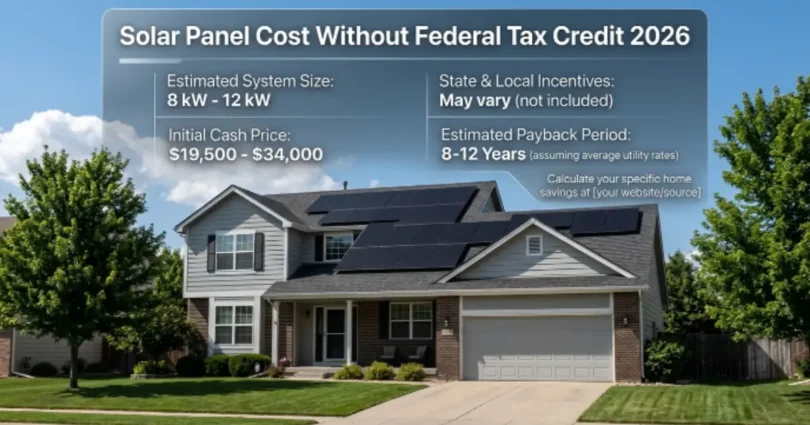
👉 Example cost: around $6,000 to $12,000 without tax credit
Medium home system (5kW to 8kW)
- Most common size for average US homes
- Covers fridge, AC, TV, and daily use
- Balanced cost and savings
- Popular choice for families
👉 Example cost: around $15,000 to $25,000
Large home system (9kW to 12kW+)
- Best for big homes or high electricity use
- Supports heavy appliances and multiple AC units
- Higher installation space needed
- More long-term savings
👉 Example cost: around $27,000 to $40,000+
What homeowners should expect to pay in 2026
- Full system price without federal tax credit is higher upfront
- Installation and equipment make up most of the cost
- Battery storage adds extra cost if included
- Final price depends on home size and energy use
👉 Simple expectation: Most homeowners should plan a mid-range budget unless usage is very low or very high.
Factors That Affect Solar Panel Cost
Solar panel prices are not the same for every home. Many simple things change the final cost. Let’s break it down in an easy way.
System size (small vs large home)
- Bigger homes need more solar panels
- More panels mean higher total cost
- Small homes use fewer panels and cost less
- Energy use decides system size
👉 Simple example: A small apartment needs fewer panels than a big family house, so the cost is lower.
Roof type and installation difficulty
- Flat roofs are usually easier to install on
- Sloped or complex roofs need more work
- Hard installations take more time and labor
- Extra safety setup can increase cost
👉 If your roof is difficult to access, the installer will charge more for effort and time.
Location and sunlight hours
- Sunny areas produce more electricity
- Less sunny regions need more panels
- Local weather affects system performance
- State rules and pricing also vary
👉 Example: A home in Arizona may need fewer panels than a home in cloudy areas.
Brand and panel quality
- High-quality panels cost more upfront
- Better brands last longer and work better
- Cheap panels save money at first but may reduce efficiency
- Warranty also depends on brand
👉 Think of it like buying shoes. Good quality costs more but lasts longer.
Installer pricing differences
- Different companies charge different rates
- Experience level affects pricing
- Some include full service, some charge extra fees
- Local competition can lower prices
👉 Always compare 2–3 installers before choosing one.
Cost Breakdown (Without Federal Tax Credit)
A solar system is made of different parts. Each part adds to the total cost. Let’s understand it in a simple way.
Solar panels cost
- Solar panels are the main part of the system
- They convert sunlight into electricity
- This is usually the biggest cost in the system
- Price depends on brand and efficiency
👉 Simple idea: More panels mean more electricity, but also higher cost.
Inverter cost
- Inverter changes solar power into usable home electricity
- Without it, solar energy cannot run home appliances
- High-quality inverters work more efficiently
- Some systems use hybrid inverters for better performance
👉 Think of inverter as the “translator” between solar power and your home.
Battery storage cost (optional)
- Batteries store extra solar energy for night use
- Not every home needs a battery system
- Adds extra cost but gives backup power
- Useful during power cuts or cloudy days
👉 Example: You store sunlight during the day and use it at night like a power bank.
Installation and labor cost
- Includes wiring, mounting, and setup work
- Depends on roof type and system size
- Skilled labor is required for safe installation
- Can vary by company and location
👉 Harder roofs and bigger systems usually increase installation cost.
Permits and inspection fees
- Local authorities may require approval
- Inspection ensures safety and proper setup
- Fees depend on city and state rules
- Often added to total project cost
👉 These are small but necessary costs before turning your system on.
Real-Life Example of Solar Cost
Let’s understand the real cost of solar with a simple example. This will help you see how much a normal home may spend and save.
Example home in a sunny US state
- Let’s take a medium-size family home
- Located in a sunny state with good sunlight
- Uses a 6kW to 8kW solar system
- No federal tax credit applied in this case
👉 This type of home is very common in the USA and gives a clear cost idea.
Monthly electricity bill comparison
- Before solar: High monthly electricity bills
- After solar: Bill reduces a lot or becomes very low
- Some homes only pay a small grid connection fee
- Savings depend on sunlight and system size
👉 Example: A $150–$200 monthly bill can drop to very low or near zero in many cases.
Payback period without tax credit
- Payback means how long it takes to recover your cost
- Without tax credit, payback time becomes longer
- Most homes recover cost in around 8 to 12 years
- After payback, electricity becomes almost free
👉 Simple idea: You pay upfront once, then save for many years after that.
Is Solar Still Worth It Without Tax Credit?
Many people think solar is only useful when government help is included. But that is not fully true. Solar can still make sense even without the federal tax credit. Let’s understand it in a simple way.
Long-term savings explanation
- Solar helps you cut electricity bills for many years
- You save money every month after installation
- Savings continue for 20+ years in most systems
- Even without tax credit, lifetime savings are strong
👉 Simple idea: You spend once, but you save again and again for a long time.
Energy independence benefits
- You depend less on the power company
- You generate your own electricity at home
- Works even better with battery backup
- Gives more control over your energy use
👉 Example: You are not fully worried about sudden power cuts or supply issues.
Protection from rising electricity prices
- Electricity prices keep increasing every year
- Solar locks your energy cost for the future
- You avoid paying higher bills later
- More protection during energy price spikes
👉 Simple idea: Your solar system gives you stable energy costs while others pay more over time.
Simple yes/no clarity for users
- Yes, solar is still worth it for long-term homeowners
- No, it may not suit if you plan to move very soon
- Best for people staying in one home for many years
- Works best for those with high electricity bills
👉 Final thought: If you stay long in your home, solar is still a smart decision even without tax credit.
Ways to Reduce Solar Panel Cost in 2026
Even without the federal tax credit, you can still lower your solar cost in smart ways. You just need to know where to look and how to plan.
State-level incentives
- Many US states still offer solar support programs
- These programs reduce your total installation cost
- Some states give cash or partial refunds
- Rules change by location and state policy
👉 Simple idea: Your state may still help you save money even if federal support is gone.
Local rebates
- Local governments sometimes offer solar discounts
- Utility companies may give special rebates
- These rebates reduce upfront system cost
- You need to apply before or after installation
👉 Example: A city rebate can reduce hundreds or even thousands from your bill.
Choosing the right installer
- Different installers charge different prices
- Trusted installers give better long-term value
- Comparing quotes helps you find the best deal
- Avoid very cheap low-quality installation work
👉 Simple idea: A good installer saves you money and future repair costs.
Net metering benefits
- You can send extra electricity back to the grid
- Utility companies may credit your bill
- Helps reduce monthly electricity cost
- Rules depend on your local energy provider
👉 Example: Your extra solar power can reduce your next electricity bill.
Financing options (loans, leases)
- Solar loans let you pay in small monthly payments
- Leases allow you to use solar without buying it fully
- Helps reduce big upfront payment pressure
- Good option for budget-friendly solar adoption
👉 Simple idea: You don’t always need full cash to go solar.
State-Wise Cost Differences in the USA
Solar panel prices are not the same in every state. Location plays a big role in the final cost. Let’s understand it in a simple way.
High-cost states vs low-cost states
- Some states have higher solar installation prices
- Others offer more affordable solar systems
- High-cost states include areas with expensive labor and strict rules
- Low-cost states have cheaper installation and better solar support
👉 Simple idea: Where you live can change your total solar cost a lot.
Why prices change by location
- Labor costs are different in each state
- Sunlight levels affect system size needs
- Local permits and rules can increase cost
- Demand for solar installers also changes pricing
👉 Example: A busy city with high labor costs will charge more than a rural area.
Simple comparison examples
- Sunny states like Arizona and Nevada often need fewer panels
- Cloudy or cold states may need larger systems for same power
- States with strong solar support can reduce overall cost
- Remote areas may have higher installation charges due to transport
👉 Example: A 6kW system may cost less in a sunny, low-cost state and more in a high-cost state with strict installation rules.
Common Mistakes Homeowners Make
Many people lose money or face problems just because they miss simple steps. Let’s look at the most common mistakes in a simple way.
Ignoring installation quality
- Poor installation can reduce system performance
- Low-quality work can cause safety issues
- Cheap installers may use weak materials
- Repairs later can cost more money
👉 Simple idea: Good installation is just as important as good solar panels.
Not comparing quotes
- Different companies charge different prices
- Some include hidden fees
- Comparing helps you find fair pricing
- You may save a good amount of money
👉 Example: Getting 3 quotes can help you avoid overpaying.
Overestimating energy needs
- Some people install bigger systems than needed
- Bigger systems cost more money upfront
- Proper energy check avoids extra cost
- Correct sizing improves efficiency
👉 Simple idea: Match your system size with your real electricity use.
Skipping research on incentives
- Many people miss local rebates or offers
- Some states still provide financial help
- Not checking incentives increases total cost
- You may lose easy savings opportunities
👉 Example: A small rebate can reduce your total bill by a lot.
Future of Solar Panel Pricing in the USA
Solar prices are changing fast. The future looks more affordable and smarter.
Technology becoming cheaper
- Solar panel production is improving
- Manufacturing costs are going down
- New technology gives better efficiency
- More people can afford solar systems
👉 Simple idea: Better tech means lower prices over time.
More competition in market
- More solar companies are entering the market
- Competition helps reduce installation cost
- Customers get better deals and offers
- Service quality is also improving
👉 Example: When many shops sell the same product, prices usually drop.
Battery storage trends
- Battery systems are becoming more popular
- Prices of batteries are slowly decreasing
- Homes can store extra solar energy
- Backup power is improving energy security
👉 Simple idea: Batteries make solar more useful day and night.
Long-term price outlook
- Solar systems will likely become more affordable
- Installation will become faster and easier
- Government policies may continue to support clean energy
- More homeowners will switch to solar
👉 Final idea: Solar is moving toward becoming a normal home energy choice.
FAQs
What is the solar panel cost without federal tax credit in 2026?
It depends on system size, but most homes may pay between $15,000 to $40,000+ without the federal tax credit.
Is solar still worth it without federal tax credit?
Yes, it is still worth it for long-term homeowners because it reduces electricity bills for many years.
What affects solar panel cost the most?
System size, roof type, location, and installer pricing have the biggest impact on total cost.
How long does it take to recover solar cost?
Without tax credit, most homeowners take around 8 to 12 years to recover their investment.
Can I still get discounts on solar in 2026?
Yes, many states and local programs still offer rebates and incentives that can reduce your total cost.
Conclusion
Solar panels are still a strong option for homeowners in the USA, even without the federal tax credit. The upfront cost may feel higher, but the long-term savings make a big difference.
Your final cost depends on system size, roof type, location, and installer choice. If you plan smart and compare options, you can still save a good amount of money.
Solar also helps you reduce electricity bills, gain energy independence, and protect yourself from rising energy prices.