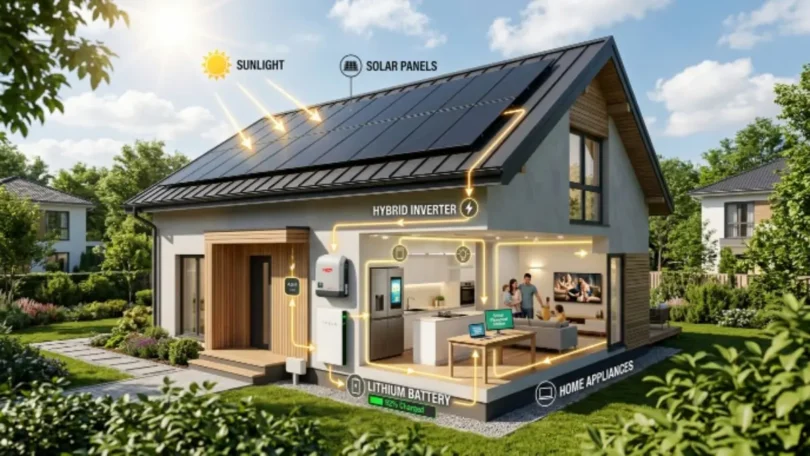
A hybrid solar inverter with battery backup is a smart system that combines solar power, battery storage, and grid electricity in one unit. It stores extra solar energy in batteries and uses it during power cuts or night time. This system helps reduce electricity bills and keeps your home powered even when the grid goes down or solar production is low.
What if your solar panels could power your home even when the sun goes down or the grid stops working?
That’s exactly what a hybrid solar inverter with battery backup is built to do. A hybrid solar inverter with battery backup stores extra solar energy in batteries and gives you power when you actually need it most.
Many people install solar systems but still feel stuck when power cuts happen or bills stay high. That gap is where this system makes a real difference in your daily life.
In this guide, you will learn how the system works in simple steps, how it supports your home during outages, and how to choose the right size for your needs. Everything is explained in a way that feels easy, even if you are completely new to solar.
Let’s begin by understanding what this system really is and how it fits into your home setup.
What is a hybrid solar inverter with battery backup?
A hybrid solar inverter with battery backup is a single system that manages solar panels, batteries, and home power together so you can store extra energy and use it later.
Simple meaning in everyday language
A hybrid solar inverter with battery backup is a smart power unit that connects your solar panels and battery in one place. It takes sunlight energy, turns it into electricity, and sends it where it is needed most.
Think about it like a control center for your home power. It decides when to use solar energy, when to store it, and when to pull power from the grid.
Here is the thing. Most people think solar panels alone are enough. But without storage, extra energy often goes to waste.
Why it is different from normal inverters
A normal inverter only converts power and sends it directly to your home. It does not manage storage in a smart way.
But a hybrid system does more. It can:
- Store extra solar energy in batteries
- Use battery power during outages
- Balance grid and solar power automatically
In practice, this means you get more control over your electricity use and less dependency on the grid.
Example:
If your home uses 10 units of electricity in a day and your solar panels produce 12 units, the extra 2 units are stored in the battery instead of being wasted.
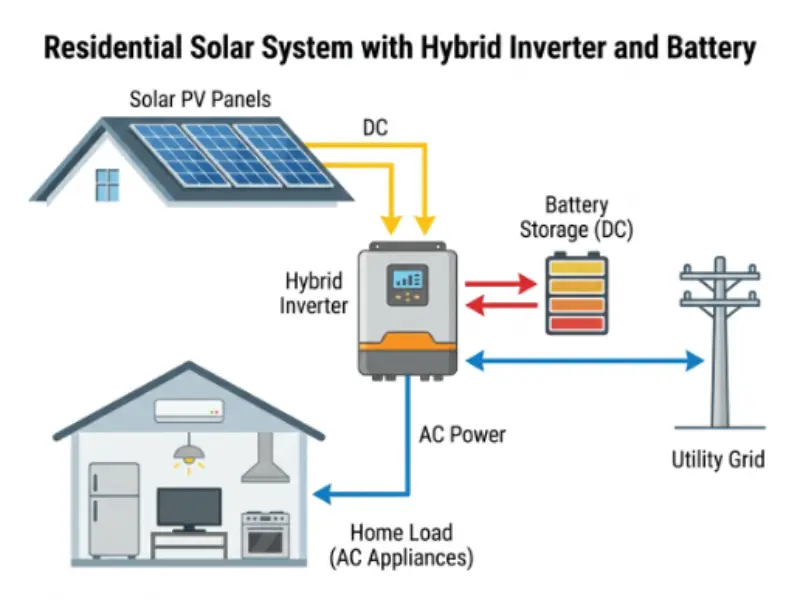
This basic setup is what makes modern solar systems more practical for real homes.
We now move into how this system actually works step by step.
How does a hybrid solar inverter with battery backup work?
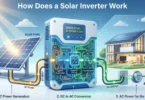
It works by converting solar energy into usable electricity, powering your home first, and storing extra energy in batteries for later use.
Energy flow step by step
Let me explain this in a simple flow so you can picture it easily.
- Solar panels catch sunlight and produce DC power
- Hybrid inverter converts it into usable AC power
- Home appliances use electricity first
- Extra power goes into the battery
- If needed, the grid supplies or takes power
This flow keeps changing based on your usage and sunlight.
The truth is, this system is always making small decisions in the background. You don’t have to do anything.
What happens during the day and night
During the day, solar energy is usually enough to run your home. Any extra energy charges your battery.
At night, there is no sunlight, so the system pulls power from the battery instead of the grid.
In real use, many homes reduce grid usage by a big margin this way. People often notice lower bills within the first month when the system is sized correctly.
What happens during power outage
When the grid goes down, the system instantly switches to battery power. You don’t even notice the change in most cases.
Modern systems switch in milliseconds, so lights and fans keep running smoothly.
Example:
During a 4-hour power cut, a 5kWh battery can run basic home load like lights, fans, and WiFi without interruption.
And here is why this matters. You stay connected even when the grid fails.
Next, we will look at the different operating modes that control how all this happens.
What are the operating modes of a hybrid inverter?
Hybrid inverters work in different modes that control how solar energy is used, stored, or shared with the grid.
Self-consumption mode explained
In self-consumption mode, your home uses solar power first. Extra energy goes to the battery, and only then to the grid if allowed.
This mode is popular because it reduces electricity bills.
Example:
If your solar system produces 8 units and your home uses 6 units, the extra 2 units go to battery storage instead of being sent back to the grid.
Backup mode (EPS mode)
EPS mode stands for Emergency Power Supply mode. This mode activates during power cuts.
When the grid fails:
- Battery power takes over instantly
- Essential appliances keep running
- Solar can still recharge the battery if sunlight is available
This is the mode people care about most in areas with frequent load shedding.
Grid support mode
In grid support mode, the system uses both solar and grid power together when needed.
It helps balance energy use during high demand times. For example, when appliances need more power than solar can provide.
Example:
If your AC needs extra power, the grid supports it while solar reduces the load.
In practice, these modes switch automatically. You don’t have to manage them manually.
And that is what makes hybrid systems feel simple even though they are technically advanced.
We will next move into AC vs DC coupling, where things get even more interesting for system design.
AC coupling vs DC coupling in hybrid systems
AC coupling and DC coupling are two different ways a hybrid solar inverter connects solar panels and batteries, and they decide how efficiently energy is stored and used.
What is AC coupling
AC coupling means solar power is converted into AC first, then sent to the inverter and battery system.
Here is the thing. In AC coupling, energy goes through more conversion steps. That means a little energy is lost during the process.
In practice, AC coupling is often used when you already have an old solar system and want to add batteries later.
Example:
A home already running a grid-tied solar system adds a battery later. AC coupling allows that upgrade without replacing the full setup.
What is DC coupling
DC coupling sends solar energy directly to the battery in DC form before conversion.
This method reduces energy loss because fewer conversions happen.
From real use, DC coupling is more common in new installations because it is more efficient and cleaner in design.
Example:
A new home installs a hybrid solar inverter with battery backup from day one. Solar panels charge the battery directly during sunlight hours.
Which one is better for homes
There is no single winner, but DC coupling usually performs better for new systems.
- AC coupling works best for upgrades
- DC coupling works best for fresh installations
- DC systems usually give higher efficiency
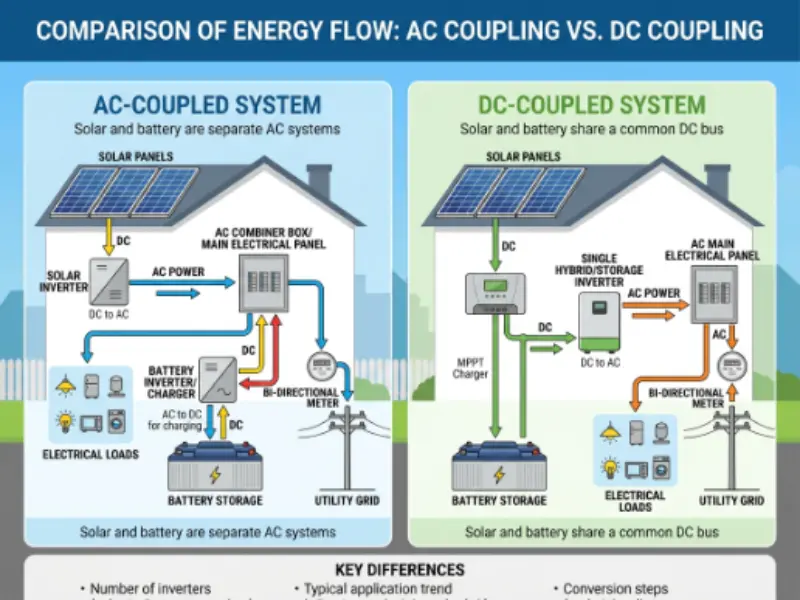
The truth is, most modern hybrid solar inverter with battery backup systems now prefer DC coupling because it wastes less energy and keeps the system simple.
And here is why this matters. Even small efficiency gains add up over years of solar use.
Next, let’s talk about how long your battery backup can actually last in real life.
How long does battery backup last in a hybrid inverter system?
Battery backup time depends on battery size, power usage, and appliance load, and it can last from a few hours to more than a full day.
Battery size and load calculation
Battery backup is not fixed. It depends on how much electricity you use.
A simple way to understand it:
- Bigger battery = longer backup
- Higher load = shorter backup
In practice, a 5kWh battery can run basic home loads like fans, lights, and WiFi for around 3 to 5 hours.
But if you run heavy loads like AC or heater, backup time drops fast.
Real-life backup examples
Let me break it down with simple real examples:
- Small load (lights + fans + WiFi): 4 to 6 hours on 5kWh battery
- Medium load (plus fridge): 3 to 4 hours
- Heavy load (AC included): 1.5 to 3 hours
From real use, most homes don’t run everything on backup. They choose essential appliances only.
That choice makes a big difference in battery life.
What reduces backup time
Several things can drain your battery faster:
- High power appliances running together
- Old or low-efficiency batteries
- Poor inverter efficiency rating
- No proper battery management system (BMS)
Think about it this way. Your battery is like a water tank. More taps open means faster emptying.
So when people ask “how long does backup last”, the real answer is always “it depends on your usage”.
Next, we will look at whether a hybrid inverter can work without a battery, which confuses a lot of people.
Can a hybrid inverter work without a battery?
Yes, a hybrid inverter can work without a battery, but it behaves more like a normal grid-tied solar system with limited backup benefits.
What works without battery
When there is no battery:
- Solar power still runs your home during the day
- Extra energy can go to the grid (if allowed)
- System still converts solar into usable electricity
So yes, your solar system does not stop working.
But here is the thing. You lose storage completely.
What stops working without battery
Without a battery, you lose important benefits:
- No backup during power cuts
- No night-time solar usage
- Less control over energy storage
From real use, this is where most people feel the limitation. They still face outages even with solar installed.
Why batteries make the system complete
A hybrid solar inverter with battery backup becomes powerful only when storage is added.
Batteries give you:
- Power during outages
- Night-time energy use
- Better control over electricity bills
Example:
Two homes have the same solar panels. One has a battery, one does not. During a power cut, only the battery home keeps lights and fans running.
And that is why most people eventually add batteries after installing solar.
Next, we will move into system sizing, which is where most people make costly mistakes.
How to size a hybrid solar inverter system correctly?
You size a hybrid solar inverter system by matching your daily electricity use, peak load needs, and battery backup goals so the system can handle your real lifestyle.
Step 1: Calculate daily usage
Start by checking how much electricity your home uses in a day.
Look at your bill or meter reading. Most homes fall into:
- Small home: 3 to 5 kWh per day
- Medium home: 6 to 10 kWh per day
- Large home: 10+ kWh per day
In practice, this step decides everything else. If you guess wrong here, your whole system can feel weak later.
Step 2: Choose inverter size
Now match your load with inverter capacity.
- Small home: 1.5kW to 3kW inverter
- Medium home: 3kW to 5kW inverter
- Large home: 5kW+ inverter
Here is the thing. Your inverter must handle peak load, not just daily use. If your AC and fridge run together, that peak matters more.
Step 3: Choose battery capacity
Battery size depends on how long you want backup.
- 3kWh battery: light backup (fans, lights)
- 5kWh battery: medium backup (basic home load)
- 10kWh battery: full home backup for longer hours
From real use, most people regret choosing too small a battery. Always think about night usage and outages.
Common sizing mistakes
- Ignoring peak load
- Choosing battery based only on price
- Not planning for future energy needs
Think about it this way. Sizing is like choosing the engine of a car. If it’s too small, everything feels slow and stressed.
We now move into why this system is actually worth considering for most homes.
What are the benefits of a hybrid solar inverter with battery backup?
A hybrid solar inverter with battery backup reduces electricity bills, provides backup power, and gives better control over how you use solar energy.
Lower electricity bills
One of the biggest benefits is bill savings.
You use solar power first, then stored battery power, so you buy less electricity from the grid.
In practice, many homes see noticeable bill drops within the first month after proper setup.
Backup during power cuts
This system keeps your home running during outages.
Lights, fans, WiFi, and even fridge can stay on depending on battery size.
Here is the thing. This is not just comfort. It also keeps your daily routine stable during long outages.
Better use of solar energy
Without a battery, extra solar power often goes unused.
With a hybrid solar inverter with battery backup, every unit of energy gets used properly.
- Day: solar runs home and charges battery
- Night: battery runs home
- Grid: only used when needed
Energy independence
You rely less on the grid and more on your own system.
This gives you more control when electricity prices change or supply becomes unstable.
The truth is, people don’t just buy solar for savings. They buy peace of mind.
Next, we will look at mistakes people make that can ruin system performance.
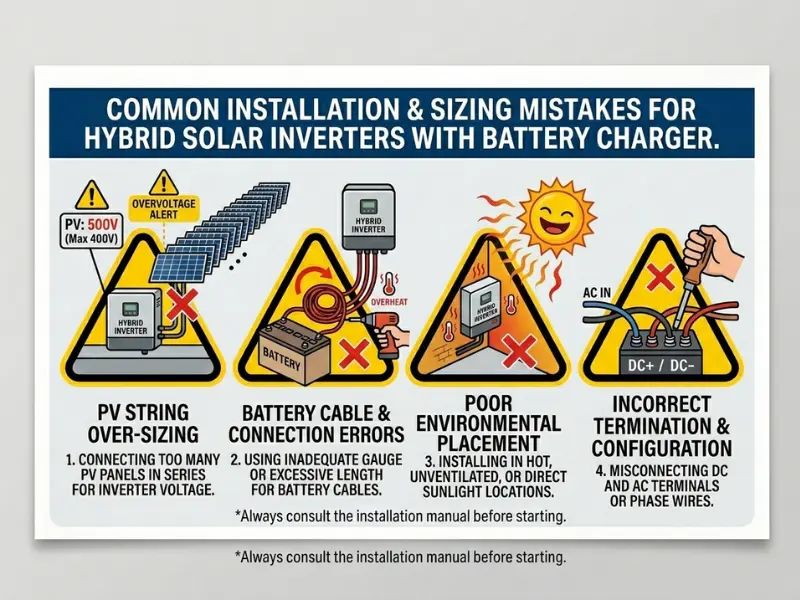
What are common mistakes people make when using hybrid inverters?
Most mistakes happen when people choose wrong sizes, ignore load planning, or install systems without proper understanding of their energy needs.
Wrong battery sizing
Many people buy a small battery to save money.
But later they realize it cannot support their home during outages.
From real use, this is the most common regret.
Poor installation setup
Bad wiring or wrong setup reduces system performance.
It can also cause energy loss and safety issues.
Always use proper installers who understand solar system design.
Ignoring load calculation
People often guess their energy usage instead of checking real data.
That leads to underpowered systems.
Think about it this way. If you don’t know your usage, your system cannot match your needs.
Choosing low quality components
Cheap batteries or low-efficiency inverters reduce long-term performance.
They may work at first but fail early.
Not planning for future load
Energy needs grow over time.
Many people forget to plan for extra appliances later.
That creates system overload issues in the future.
And here is why this matters. A small mistake in setup can affect your system for years.
Next, we will answer the big question most readers have: is it really worth it?
Is a hybrid solar inverter with battery backup worth it for homes?
Yes, it is worth it for most homes that face high electricity bills or regular power cuts because it provides both savings and backup power in one system.
When it is worth it
It makes sense if you:
- Face frequent power outages
- Want lower electricity bills
- Use most electricity during night hours
In practice, homes in unstable grid areas benefit the most.
When it is not worth it
It may not be needed if:
- Your area has stable electricity
- Your energy use is very low
- You are only looking for small savings
The truth is, not every home needs full backup storage.
Cost vs benefit simple view
Yes, the system costs more upfront.
But over time:
- You save on bills
- You reduce grid dependency
- You gain backup power
Think about it this way. You are paying once for long-term comfort and control.
Real-life example
A medium home with a 5kW system and 5kWh battery can reduce grid usage significantly and still run essential loads during outages.
That balance is what makes it practical for many families.
Frequently Asked Questions
Below are some frequently asked questions to help you understand better
What is a hybrid solar inverter with battery backup?
A hybrid solar inverter with battery backup is a system that combines solar power conversion and battery storage in one unit. It uses solar energy to run your home first, stores extra power in batteries, and supplies electricity during outages or at night when solar power is not available.
How does a hybrid inverter work?
A hybrid inverter works by converting solar energy into usable electricity and sending it to your home. Extra energy charges the battery, and when the sun is not available or during power cuts, the system automatically uses stored battery power to keep your home running smoothly.
What is the difference between hybrid and normal inverter?
A normal inverter only converts electricity and provides backup during outages using grid-charged batteries. A hybrid inverter manages solar panels, batteries, and grid power together. It saves solar energy directly and gives better control over power usage and long-term electricity savings.
Can a hybrid inverter work without batteries?
Yes, a hybrid inverter can work without batteries, but it will act like a standard solar grid-tied system. It will run your home during the day using solar power, but you will not get backup during power cuts or energy storage benefits for night use.
How long can battery backup last in a hybrid solar system?
Battery backup in a hybrid solar system can last anywhere from 2 to 10 hours depending on battery size and energy usage. Light loads like fans and lights last longer, while heavy appliances like air conditioners reduce backup time quickly due to higher power demand.
Which battery is best for a hybrid solar inverter?
Lithium-ion batteries are the best choice for a hybrid solar inverter because they last longer, charge faster, and need less maintenance. They also work better with modern battery management systems, giving stable performance and higher efficiency compared to traditional lead-acid batteries.
Does a hybrid solar system really save electricity bills?
Yes, a hybrid solar system saves electricity bills by using solar energy first and storing extra power for later use. This reduces your dependence on the grid. Over time, many homes see noticeable savings, especially when the system is properly sized for daily usage.
What happens when the battery is full in a hybrid inverter?
When the battery is full, the hybrid inverter stops charging it and redirects extra solar energy to the home or the grid if net metering is available. This prevents energy waste and ensures solar power is always used in the most efficient way possible.
Is AC coupling or DC coupling better for hybrid systems?
DC coupling is generally better for new hybrid solar systems because it is more efficient and reduces energy loss. AC coupling is useful when adding batteries to an existing solar system. Both work well, but DC coupling is preferred for fresh installations.
Is a hybrid solar inverter worth it for home use?
A hybrid solar inverter is worth it for homes that face power cuts or high electricity bills. It provides backup power, lowers grid usage, and gives better control over solar energy. However, it may not be necessary for areas with stable electricity supply.
Conclusion
It all comes down to one simple idea. Solar power becomes far more useful when you can store it and use it when life actually needs it.
A hybrid solar inverter with battery backup gives you that control. It lets you run your home on solar during the day, store extra energy for later, and stay powered during outages without stress. You also learned how operating modes, AC vs DC coupling, and proper system sizing all play a big role in how well your system performs in real life.
The truth is, many people install solar but don’t get full value because they miss these basics. Now you understand what actually makes the difference.
A hybrid solar inverter with battery backup is not just a technical setup. It is a way to make your energy more stable, more predictable, and more useful every single day.
If this guide helped you, take a moment to think about your own home setup and share it with someone who is also planning solar. It might save them from making costly mistakes.