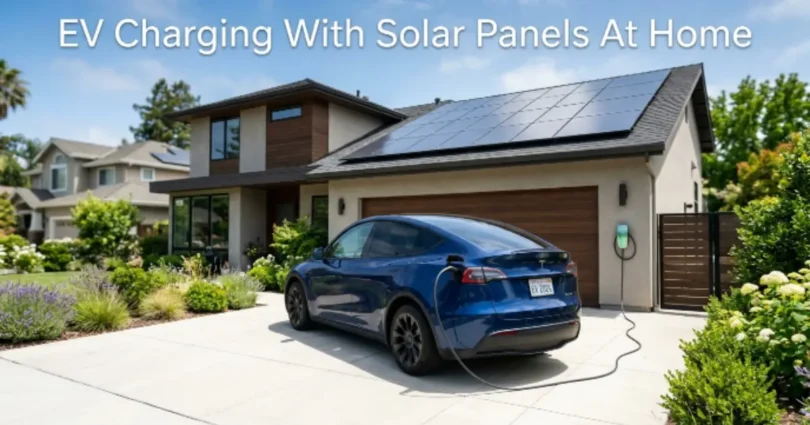
Electric vehicles are becoming more popular every day. People want cheaper and cleaner ways to charge their cars at home. This is where EV Charging With Solar Panels At Home becomes a smart choice. It allows you to use sunlight from your rooftop to power your electric car in a simple way.
With EV Charging With Solar Panels At Home, you can reduce your electricity bills and also use clean energy. It is a practical solution for homeowners who want to save money and support a greener future. Instead of relying only on the grid, you can use solar energy to keep your EV ready anytime.
What Is EV Charging With Solar Panels At Home
EV charging with solar panels at home is a simple way to power your electric car using sunlight. It uses rooftop solar panels to make electricity, and that electricity is used to charge your EV instead of buying full power from the grid.
Basic Concept Explained in Simple Words
- Solar panels catch sunlight and turn it into electricity.
- That electricity runs your home and your EV charger.
- You use free sunlight instead of paid grid electricity.
- It helps you save money every month.
👉 Simple idea: Sunlight → Electricity → EV Charging
How Solar Panels Connect With EV Chargers
- Solar panels send power to an inverter first.
- The inverter changes solar power into usable electricity.
- This electricity flows to your home EV charging point.
- Some systems also store extra energy in a battery.
👉 Easy flow: Solar Panels → Inverter → EV Charger
Example: Daytime Charging Using Rooftop Solar System
- You plug in your EV during sunny daytime hours.
- Solar panels produce strong power at the same time.
- Your car gets charged directly from solar energy.
- Extra energy can support your home appliances too.
👉 Real-life example: You come home at noon, plug in your EV, and sunlight does the charging work for you.
How The System Works
EV charging with solar panels at home works in a simple step-by-step process. Each part has a clear role. Together, they turn sunlight into power for your electric car.
Solar Panels Generate Electricity
- Solar panels sit on your roof and catch sunlight.
- They turn sunlight into direct electricity (DC power).
- More sunlight means more power production.
- This is the first and most important step.
👉 Simple idea: Sunlight is the main fuel for your system.
Inverter Converts Power For Home Use
- Solar power is not ready to use directly in home devices.
- The inverter changes DC power into AC power.
- AC power is what your home and EV charger need.
- It also controls and balances energy flow.
👉 Simple idea: Inverter makes solar power usable for your home.
EV Charger Uses That Electricity To Charge The Car
- The EV charger takes power from your home system.
- It sends electricity safely into your car battery.
- Charging speed depends on solar power and charger type.
- Extra power can also support other home appliances.
👉 Simple idea: Your car battery fills up using clean solar energy.
Types Of Solar EV Charging Systems
There are different ways to set up EV charging with solar power at home. Each system works in its own style. You can choose based on your budget and energy needs.
Grid-Tied System
- This system stays connected to the main electricity grid.
- Solar power is used first for home and EV charging.
- Extra electricity goes back to the grid.
- You may get credit for extra power in some setups.
👉 Simple idea: Use solar power and stay connected to the main grid.
Off-Grid System
- This system works without any grid connection.
- Solar panels generate all the electricity you need.
- Batteries store extra energy for night use.
- It gives full independence from the electricity company.
👉 Simple idea: You rely only on solar power and batteries.
Hybrid System
- This system combines solar panels, batteries, and grid power.
- Solar energy is used first for EV charging.
- Battery stores extra energy for later use.
- Grid power works as backup when needed.
👉 Simple idea: It mixes solar, battery, and grid for flexible use.
Benefits Of EV Charging With Solar Panels At Home
Using solar power for EV charging at home brings many real benefits. It is simple, cost-saving, and better for the environment. Let’s look at the main advantages.
Lower Electricity Bills
- Solar energy reduces your monthly power costs.
- You use sunlight instead of paid grid electricity.
- EV charging becomes much cheaper over time.
- Extra savings help with other household expenses.
👉 Simple idea: Less grid use means lower bills every month.
Clean And Green Energy Use
- Solar power does not create pollution.
- It uses natural sunlight, not fuel or gas.
- Helps reduce harmful carbon emissions.
- Supports a cleaner environment for everyone.
👉 Simple idea: You charge your car in an eco-friendly way.
Less Dependence On Fuel And Grid
- You rely less on traditional electricity supply.
- No need to worry about fuel price changes.
- Solar power gives more control over energy use.
- Helpful during power cuts or high demand times.
👉 Simple idea: You gain more energy independence at home.
Long-Term Savings
- Initial setup cost is balanced by long-term savings.
- Solar panels work for many years with low maintenance.
- EV charging cost drops significantly over time.
- It becomes a smart financial investment.
👉 Simple idea: Spend once, save for many years.
Requirements To Set Up The System
Setting up EV charging with solar panels at home needs some basic things. Each part plays an important role. Let’s understand them in a simple way.
Solar Panel System Size
- The system size depends on your EV charging needs.
- Bigger battery cars need more solar power.
- More panels mean more energy production.
- A small home setup may need fewer panels.
👉 Simple idea: More energy use means more solar panels.
EV Charger Compatibility
- Your EV charger must match your car type.
- Some chargers support fast charging options.
- Smart chargers help control energy use better.
- Not all chargers work with every solar system.
👉 Simple idea: Your charger must fit your car and system.
Inverter And Battery (If Needed)
- Inverter changes solar power into usable electricity.
- Battery stores extra energy for night use.
- Not all systems need a battery setup.
- Hybrid systems use both inverter and battery.
👉 Simple idea: Inverter and battery help manage your solar power.
Roof Space And Sunlight Availability
- Enough roof space is needed for solar panels.
- More sunlight means better energy production.
- Shaded roofs reduce system efficiency.
- South-facing roofs usually get better sunlight.
👉 Simple idea: More sun and space means better results.
Cost Of Installation
Installing EV charging with solar panels at home needs an upfront budget. The cost is not fixed. It depends on system size, equipment, and your energy needs. Let’s break it down in a simple way.
Basic Setup Cost Idea
- A small home solar EV setup costs less than a large system.
- More panels mean higher starting cost.
- Adding a battery increases the total price.
- Smart EV chargers also add to the cost.
👉 Simple idea: Bigger system = higher installation cost.
Factors That Affect Price
- Solar panel quality and brand
- Size of your roof system
- Type of inverter used in setup
- Battery storage requirement
- EV charger type and speed
- Installation labor and wiring work
👉 Simple idea: Different choices change the total cost.
Long-Term Savings Vs Upfront Cost
- Initial cost may feel high at first.
- Solar power reduces monthly electricity bills.
- EV charging becomes much cheaper over time.
- System pays back its cost in long-term use.
👉 Simple idea: Pay once, save for many years.
Challenges And Limitations
EV charging with solar panels at home is a smart system, but it also has some limits. Knowing these helps you plan better and avoid surprises.
High Initial Investment
- Setting up solar panels needs a big starting cost.
- EV chargers and inverters also increase the budget.
- Battery storage makes the system even more expensive.
- Many people find the upfront cost difficult at first.
👉 Simple idea: You need more money at the start before savings begin.
Weather Dependence
- Solar panels depend fully on sunlight.
- Cloudy or rainy days reduce power production.
- Winter or low-sunlight days affect charging speed.
- Night time charging needs battery or grid support.
👉 Simple idea: Less sun means less charging power.
Space Requirement For Panels
- You need enough roof space for solar panels.
- Small roofs may not support a full system.
- Shaded or blocked roofs reduce efficiency.
- More EV usage means more panel space needed.
👉 Simple idea: Bigger energy needs more roof space.
Tips For Better Efficiency
You can get better results from EV charging with solar panels at home by using a few simple habits. These tips help you save more energy and charge your EV faster.
Use Smart EV Charger
- Smart chargers control power flow automatically.
- They match charging with solar energy output.
- They reduce wasted electricity.
- They help you track energy use easily.
👉 Simple idea: Smart charger gives better control and savings.
Charge During Peak Sunlight Hours
- Solar panels produce the most power in daytime.
- Midday is the best time for EV charging.
- You get faster charging speed in strong sunlight.
- Less need for grid electricity during this time.
👉 Simple idea: More sun means faster and cleaner charging.
Keep Panels Clean
- Dust and dirt reduce solar panel performance.
- Clean panels produce more electricity.
- Regular cleaning improves efficiency.
- Simple water cleaning works in most cases.
👉 Simple idea: Clean panels give more power.
Use Energy-Efficient Driving Habits
- Smooth driving reduces battery use.
- Avoid sudden acceleration and braking.
- Proper tire pressure improves efficiency.
- Smart driving helps extend EV range.
👉 Simple idea: Better driving means less charging needed.
Future Of EV Charging With Solar Panels At Home
EV charging with solar panels is growing fast. Technology is improving every year. It is becoming more affordable and more powerful for home users.
Growing EV Adoption
- More people are buying electric vehicles.
- Demand for home charging is increasing.
- Solar power is becoming more popular.
- Clean energy use is rising worldwide.
👉 Simple idea: More EVs mean more need for solar charging.
Better Solar Technology
- Solar panels are becoming more efficient.
- New systems produce more power in less space.
- Battery storage is also improving.
- Charging systems are becoming smarter.
👉 Simple idea: New tech gives more power from less space.
Cheaper And Smarter Home Charging Systems
- Installation costs are slowly decreasing.
- Smart systems manage energy automatically.
- Home charging is becoming more user-friendly.
- More people can now afford solar EV setups.
👉 Simple idea: Future systems will be cheaper and easier to use.
FAQs – EV Charging With Solar Panels At Home
Can I charge an EV directly with solar panels at home?
Yes, you can charge an EV using solar panels through an inverter and EV charger. The system converts sunlight into usable electricity for your car.
How many solar panels are needed to charge an electric car?
It depends on your car battery size and daily driving. Most homes need around 10 to 20 panels for regular EV charging needs.
Is solar EV charging worth it?
Yes, it is worth it for long-term savings. It reduces electricity bills and gives clean energy for daily EV charging.
Can I charge my EV at night with solar power?
Yes, but only if you have a battery storage system. Without batteries, solar charging works mainly during the daytime.
How long does it take to charge an EV with solar panels?
Charging time depends on sunlight strength and charger type. On average, it can take 4 to 10 hours for a full charge.
Do solar panels work during cloudy weather?
Yes, but power production is lower. Charging becomes slower on cloudy or rainy days compared to full sunlight.
What is the biggest benefit of solar EV charging at home?
The biggest benefit is saving money on electricity bills while using clean and renewable energy for your car.
Conclusion
EV charging with solar panels at home is a smart and simple way to power your electric car. It helps you use clean energy and reduces your electricity bills over time.
It may need a higher setup cost at the start, but it gives long-term savings and better energy control. With the right system, you can enjoy easy, eco-friendly charging every day right at home.