Solar batteries help store extra energy produced by your solar panels. This stored energy can be used at night or during power outages. If you are planning to invest in a solar energy system, one important question is: how long does a solar battery last?
The answer depends on several factors, including the battery type, usage habits, and maintenance. Some solar batteries can last for many years, while others may need replacement sooner. Understanding how long does a solar battery last can help you make a smart decision and get the best value from your solar system.
In this guide, you will learn the average lifespan of solar batteries, the factors that affect their performance, and simple tips to help them last longer.
How Long Does a Solar Battery Last – Typical Lifespan
Knowing the typical lifespan of a solar battery helps you plan for replacements and get the best value from your solar system. Here’s a detailed look:
Average Lifespan in Years
- Most solar batteries last 5 to 15 years, depending on type and usage.
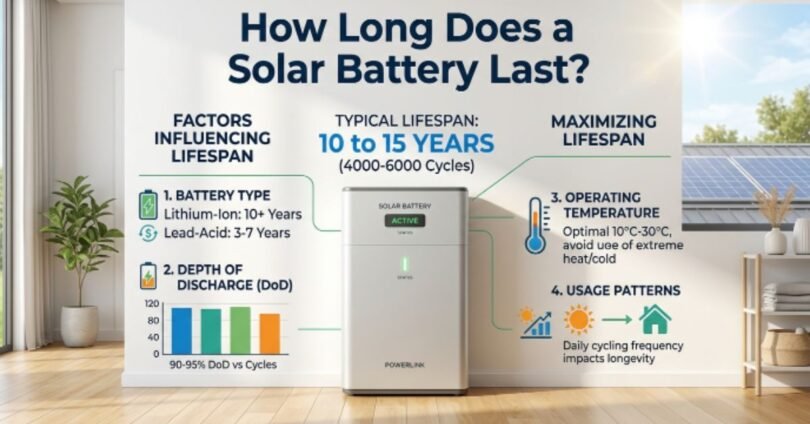
- Lithium-ion batteries usually last 10 to 15 years.
- Lead-acid batteries generally last 5 to 7 years.
Types of Solar Batteries
- Lithium-ion: Long-lasting, lightweight, and efficient.
- Lead-acid: Cheaper, reliable, but shorter lifespan and heavier.
- Flow batteries: Less common, can last 10+ years with proper care.
Real-Life Example of Usage
- A home using a 10 kWh lithium-ion battery daily for 8 hours can last around 12 years with proper maintenance.
- A lead-acid battery used in the same setup may need replacement after 6 years.
- Regularly discharging batteries to very low levels can reduce their lifespan by 2–3 years.
Factors That Affect How Long a Solar Battery Lasts
Several factors can influence how long a solar battery lasts. Understanding them can help you get the most from your investment.
Battery Type – Difference in Lifespan by Type
- Lithium-ion batteries last longer, usually 10–15 years.
- Lead-acid batteries have a shorter life, around 5–7 years.
- Flow batteries can last over 10 years if used properly.
Usage & Load – How Daily Use Impacts Life
- Frequent full discharges can reduce battery lifespan.
- Heavy daily usage shortens the overall life compared to light use.
- Using the battery efficiently can extend its life by several years.
Temperature & Environment – Heat, Cold, and Humidity Effects
- High temperatures can damage batteries faster.
- Extremely cold weather may reduce performance temporarily.
- Humid or damp conditions can cause corrosion in some battery types.
Maintenance & Care – Tips to Extend Battery Life
- Check battery voltage and health regularly.
- Keep the battery clean and dry.
- Avoid fully discharging the battery too often.
- Follow manufacturer guidelines for charging and storage.
Signs Your Solar Battery Is Near End of Life
Recognizing the signs early can help you replace your battery before it causes problems. Here’s what to watch for:
Reduced Storage Capacity
- The battery holds less energy than before.
- You may notice it runs out faster than usual.
- Daily energy needs may no longer be met.
Slower Charging
- Battery takes longer to reach full charge.
- Charging may stop unexpectedly or fluctuate.
- Solar panels may not fully recharge the battery in a day.
Visible Damage or Leaks
- Cracks, bulges, or corrosion on the battery casing.
- Leaking fluid or unusual stains around the battery.
- Physical damage can affect safety and performance.
Strange Noises or Overheating
- Hissing, popping, or buzzing sounds during use.
- Battery becomes unusually hot while charging or discharging.
- Overheating can be a sign of internal failure.
How to Extend How Long a Solar Battery Lasts
Taking a few simple steps can help your solar battery last longer and perform better.
Proper Installation Tips
- Place the battery in a cool, dry, and ventilated area.
- Ensure correct wiring and connections to avoid damage.
- Follow the manufacturer’s installation instructions carefully.
Regular Maintenance Steps
- Clean the battery and surrounding area regularly.
- Check terminals for corrosion and tighten connections.
- Inspect the battery for any signs of damage or leaks.
Avoiding Deep Discharges
- Do not let the battery drain completely too often.
- Keep usage within recommended charge limits.
- Use a battery management system if possible to prevent over-discharge.
Monitoring Battery Health
- Check voltage and charge levels regularly.
- Use monitoring tools to track performance over time.
- Replace or service the battery if performance drops significantly.
When to Replace Your Solar Battery
Knowing the right time to replace your solar battery ensures safety and keeps your system running efficiently.
Recommended Replacement Timelines
- Lithium-ion batteries typically last 10–15 years.
- Lead-acid batteries usually need replacement after 5–7 years.
- If your battery shows multiple signs of wear, replacement may be needed sooner.
Cost vs. Benefit of Early Replacement
- Replacing early can prevent energy shortages and damage to other system components.
- Waiting too long may reduce efficiency and increase electricity costs.
- Consider the price of a new battery versus lost energy or repairs.
Safety Considerations
- Damaged or leaking batteries can cause fire or chemical hazards.
- Overheating batteries may become dangerous if ignored.
- Always follow manufacturer safety guidelines when replacing batteries.
Conclusion
Understanding how long does a solar battery last can help you make better decisions for your solar energy system. Most solar batteries can last between 5 and 15 years, depending on the battery type, usage, and maintenance.
By taking proper care of your battery and watching for signs of wear, you can extend its lifespan and get the most value from your investment. A well-maintained solar battery will provide reliable energy for many years to come.